Cardboard Wine Carriers
A cardboard wine carrier is a box your customer walks out with, so it has one job the courier shipper doesn't: the handle has to survive the trip from your counter to their car, and then to the dinner table. That changes what we build. The board gets a facing paper that takes a scuff, the handle gets reinforced where fingers pull, and the bottle gets held so two or three of them don't knock shoulders on the way.
A shipper is fine for a parcel network, but it looks wrong on a shop floor. Carriers sit in the middle: light enough to carry in one hand, stiff enough to keep glass from touching glass, and flat enough to store before the event. Get the handle and the dividers right and the rest is decoration.
How to Choose a Carrier
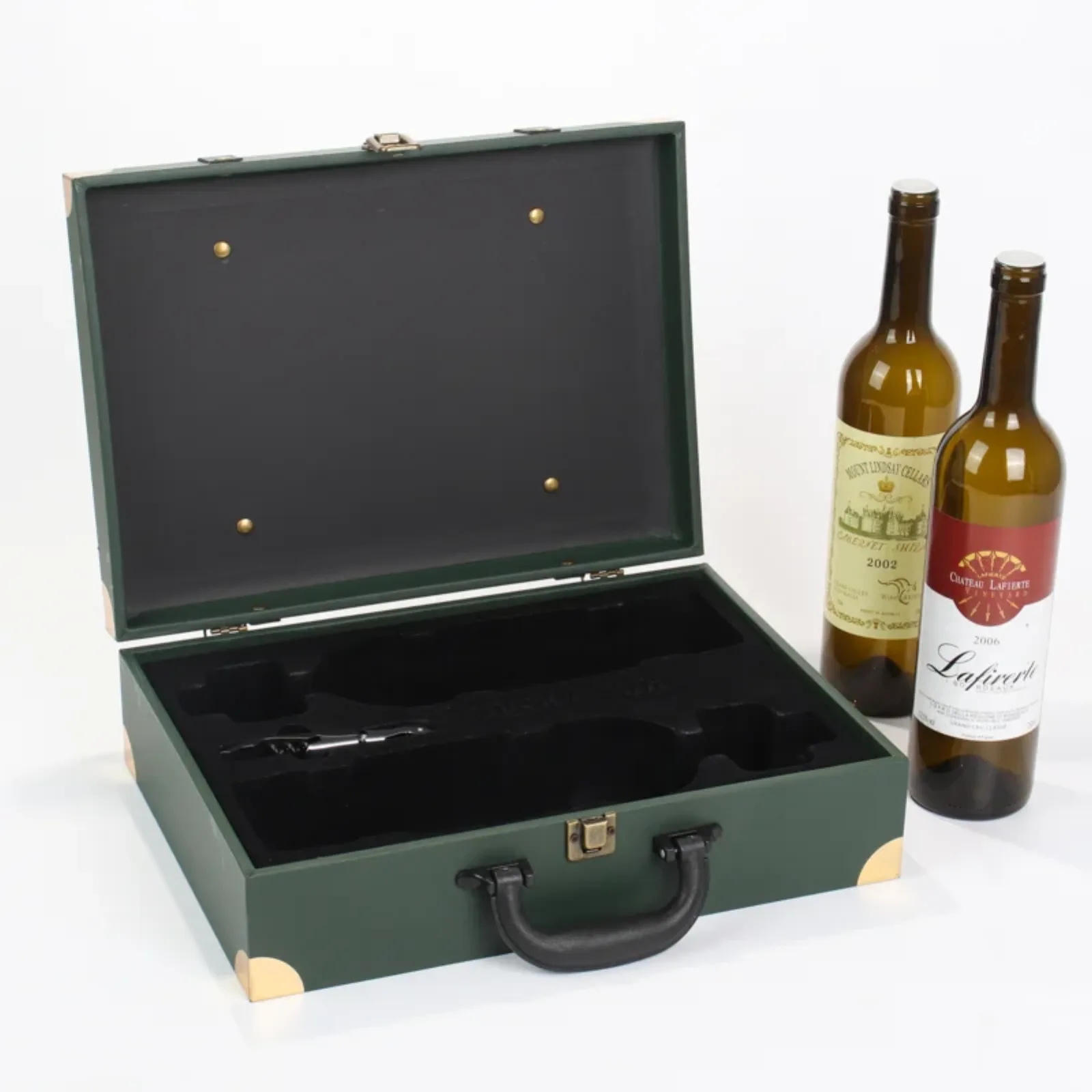
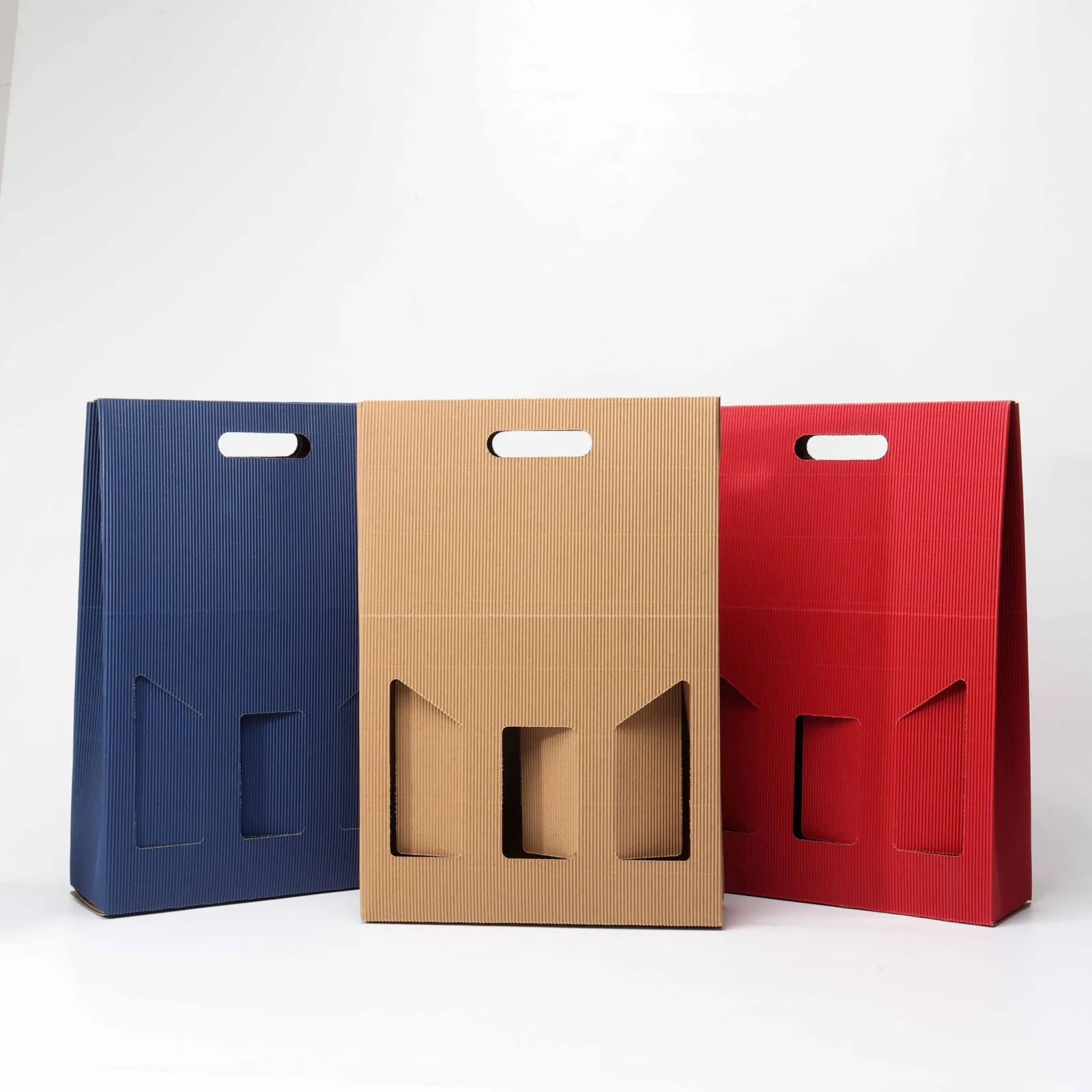
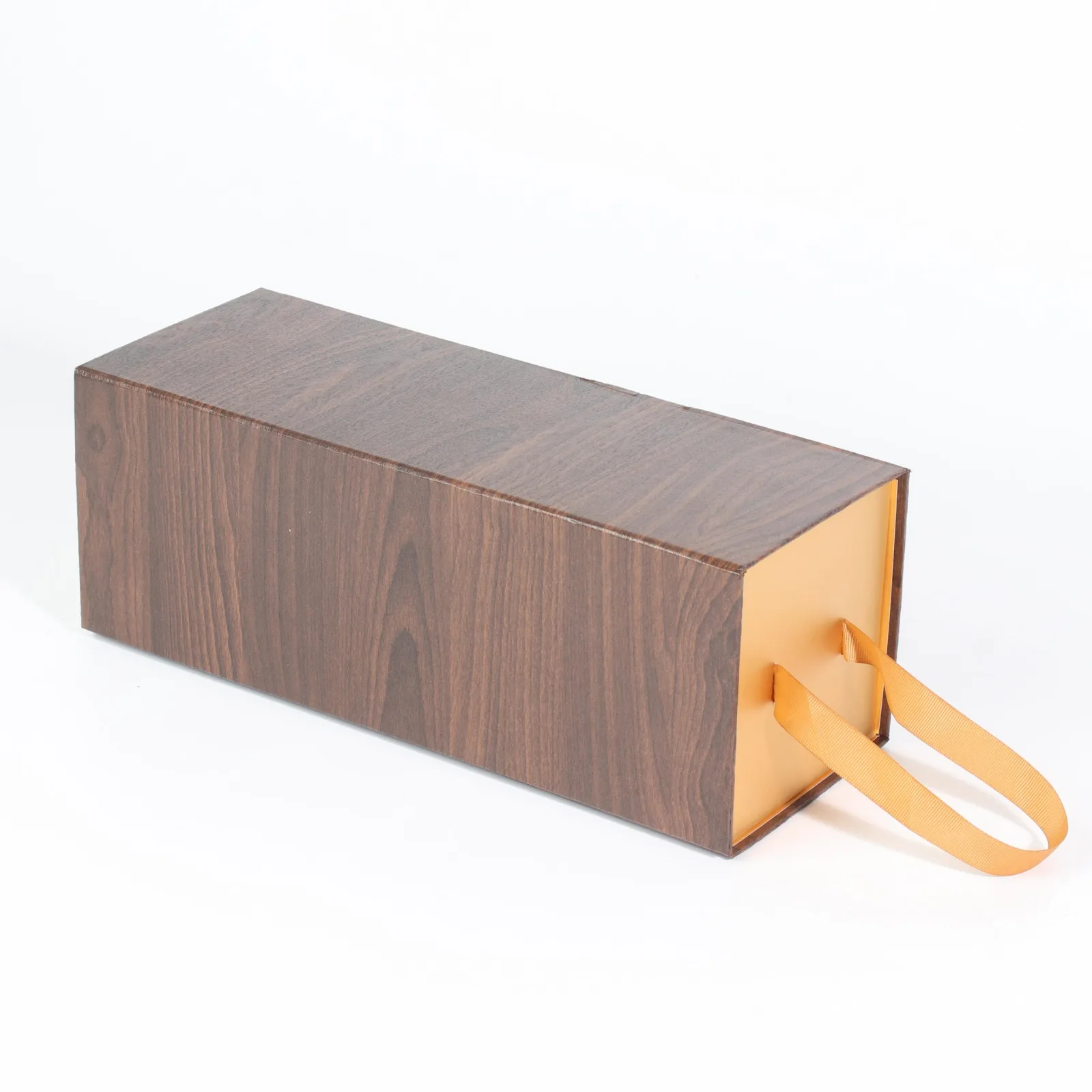
Start with the handle, because that's what fails. A punched handle, cut straight through the board, is the cheapest and it's fine for one light bottle. It tears at the two ends of the slot when the load swings. A ribbon handle spreads the pull across a wider area and looks softer, but the ribbon has to be anchored to the board, not just threaded through a slit. A leather strap behaves best under weight, and it's the one buyers ask for on gift work.
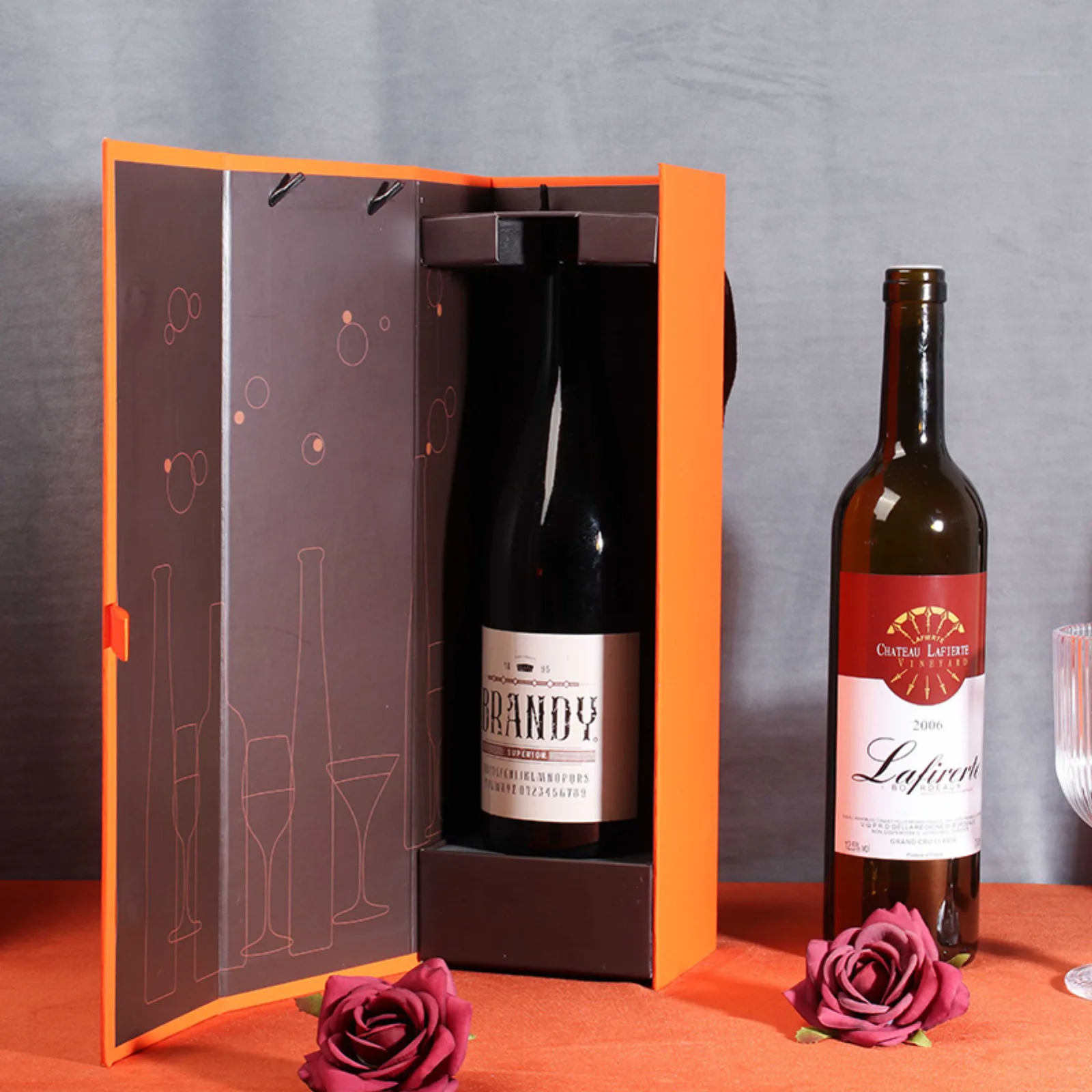
Bottle count decides the internal layout. One bottle is simple. Two is where it gets interesting, because the pair will touch unless you separate them. Three needs a proper insert, not just a folded divider, or the middle bottle walks. We hold each bottle at four points, never by the neck alone, and we check it by shaking the loaded carrier for ten seconds, tilting it to 45 degrees, and inverting it. No movement, no slide, no release.
Then decide whether it ships flat. A foldable carrier saves you storage and freight before it's used, and it's the right call for tasting rooms that order in volume and assemble on site. The trade is that creases have to be scored properly or they crack along the fold after a few open and close cycles. If your carrier is meant to sit on a shelf as a gift, a rigid build holds its shape longer. Branding is the last call: kraft board with a single printed logo reads honest and cheap to produce, while a fully printed board lets you run colour across the whole panel.
Buyer questions
Which handle holds up best on a two bottle carrier?
For two bottles, a leather strap or a well-anchored ribbon beats a punched slot. A punched handle concentrates the whole load on two small points of board, and that's where it tears first. Whichever you pick, the anchor has to spread the pull across the panel, not sit in a thin strip of board.
Should I choose kraft board or a printed board?
Kraft with one printed logo suits a shop or tasting room that wants a natural look and a lower print cost. A fully printed board gives you colour across every panel, which is what gift and event work usually needs. Both take the same greyboard underneath, so the structure doesn't change, only the facing and the printing.
Can the carrier ship flat and still hold its shape?
Yes, and foldable carriers are common for events where you assemble on site. The catch is the crease. Score it right and the fold survives repeated opening. Score it badly and it cracks along the line. We check creases as part of our control tolerance, and corners have to sit at 90 degrees once the carrier is erected.
What We Control in Production
Board and facing paper come first. Greyboard runs at 1200 g minimum, and 1400 g is what we recommend for spirits, because a heavier bottle puts more load through the base and the handle anchor. Facing paper is 157 g minimum, in specialty paper. We don't run recycled greyboard and we don't run high-moisture paper, since both show up later as a warp or a soft corner. On kraft carriers the facing is the look, so the grade matters as much as the print.
Our control tolerance is plus or minus 1 mm on the insert and plus or minus 2 mm on the box body. On foldable carriers the creases must not crack, magnet position holds to plus or minus 1 mm, and corners sit at 90 degrees when erected. Colour is matched to Pantone with first-article approval and mid-run sampling. Black, deep blue and burgundy are the hardest to hold, so if your brand colour lives there, expect to look at a proof before the run. Our in-house checks include a 1.2 m six-face drop test, a stacking top load of 40 kg or more held for 24 hours, and truck and sea vibration simulation with no internal movement.
Get a quote for cardboard wine carriers
Send the bottle size or a sample, quantity and a reference design. We reply with structure options and pricing.
- Email[email protected]