12 September 2026
Pulp Wine Shippers: How Molded Pulp Holds Bottles in Transit
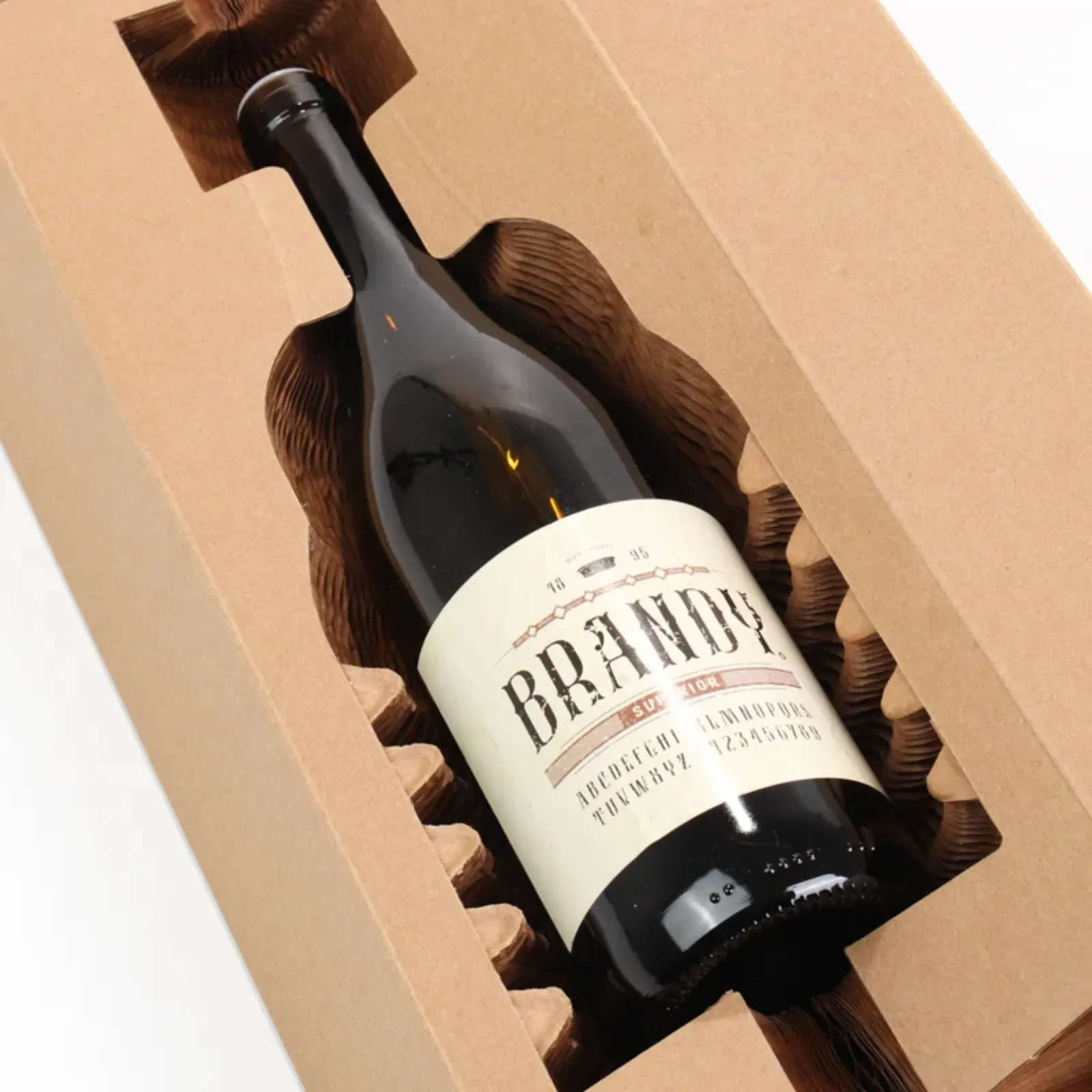
Pulp wine shippers are corrugated outer cartons with molded paper pulp cradles inside. Each bottle sits in those cradles, held away from the carton walls and away from its neighbors. It works because the pulp grips the bottle at fixed points and absorbs a knock by crushing in one spot instead of passing that energy into the glass.
What a pulp wine shipper actually is
Strip it back and you have three parts. The outer carton carries the stacking load and takes the scuffs. The pulp cradles, usually one above and one below the bottle or a pair wrapping the sides, hold the glass off the walls. The bottle never touches the carton. That gap is the whole point.
The cradle is not a soft bed. It is a shaped shell, pressed from paper pulp, and it grips at fixed points around the bottle. Hit the carton and the pulp crushes locally at the impact point, which spends the energy in the cradle rather than sending it through the glass. That local crush is why a dented shipper often arrives with an intact bottle inside.
The fit between cradle and carton matters as much as the fit between cradle and bottle. A cradle that rattles inside the carton is doing nothing. Our control tolerance is plus or minus 1 mm on inserts and plus or minus 2 mm on the box body, and those two numbers have to work together. If the carton runs large and the cradle runs small, you get a loose stack and the bottle moves on every bump.
Pulp against foam against corrugated
Three ways to protect a bottle in a shipper, and each one has a real trade-off. Molded pulp crushes locally to absorb a knock, though it softens if it gets wet. Expanded foam, the material behind most styrofoam wine shipping boxes, cushions well but is bulky and does not fold flat. Corrugated dividers and honeycomb cushioning, like the internal honeycomb structure in our corrugated wine shippers, are simple to form and fold flat, but they give less sideways grip than a molded cradle.
Damp is where the comparison gets honest. Pulp takes on moisture and can soften at the edges, though it keeps its shape. Foam does not care about humidity. Corrugated dividers lose stiffness fast once the board takes on water, which is why the outer carton has to do its job first.
Then there is the unboxing. A customer opens a pulp shipper and sees a paper cradle, which reads as considered packaging. Foam reads as a mail-order crate, and plenty of buyers dislike it on sight even when it performed. Corrugated dividers sit somewhere in the middle: tidy, but plainly functional.
Afterwards, the pulp cradle goes in the paper stream. Foam does not. Corrugated folds down flat. None of that changes how the box performs in the courier van, but it changes what your customer thinks of you when the lid comes off, and that is a buying decision too.
Bottle counts and where the knocks land
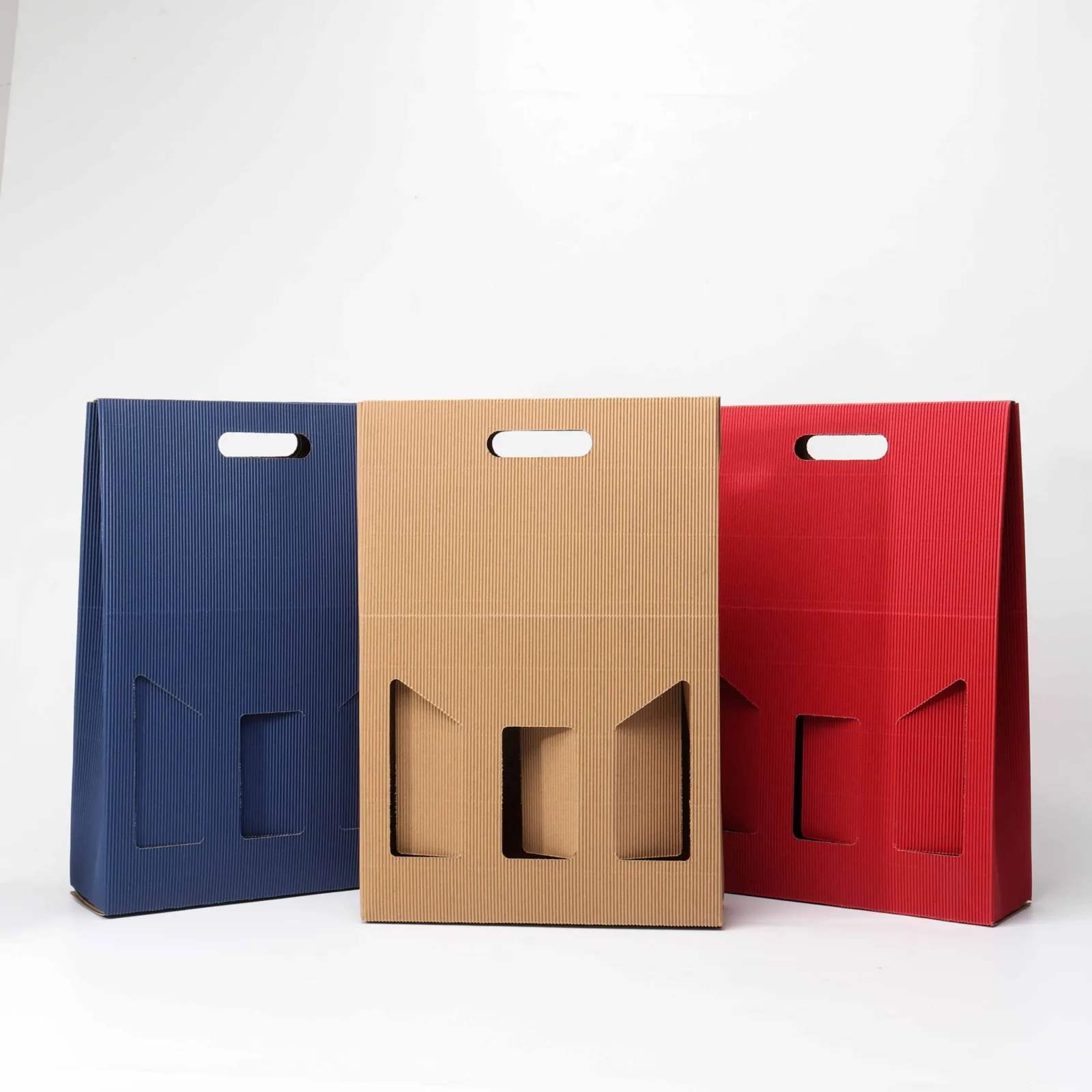
One, two and three bottle cartons with handles are the common shapes, and larger multi bottle layouts follow the same logic with more cradles. A handle changes the load path. Lift a full carton by the handle and the whole weight hangs off that one area, so the board around it has to be heavier than the rest of the carton.
In a multi bottle carton, the corner positions take the hardest knocks. Drop a four or six bottle shipper and it lands on a corner far more often than it lands flat, because that is how a box falls. The bottle nearest that corner gets the least protection from its neighbors and the most from its cradle. If you are going to overbuild one position, overbuild the corners.
The middle bottles are the easy ones. They are surrounded, they rarely see a direct hit, and their cradles mostly stop them from moving sideways into the next bottle. Glass on glass is the failure you are trying to avoid, and a cradle that lets two bottles touch has already failed even if it looks fine on the table.
If your run is small and the shape is unusual, molded pulp may not be the right answer at all. Tooling for a pulp cradle suits a shape you will repeat. For a one-off or a short run, a rigid box with a foam or velvet insert often makes more sense, and I will say so rather than sell you a cradle you will not use twice.
How we check a shipper before it leaves
Our in-house pre-shipment checks are the same whether the order is one carton or a pallet. A 1.2 m drop test with the bottle loaded, on all six faces. A stacking top load of 40 kg or more held for 24 hours. A transport vibration simulation, truck and sea, and no internal movement allowed. If the bottle shifts inside the cradle, the cradle is wrong.
The insert fit checks come first because they are fast and they catch most problems. Shake the loaded shipper for 10 seconds and nothing should move. Tilt it 45 degrees and the bottle should not slide. Invert it and the bottle should not release. Those three take a minute and they tell you more about the fit than any amount of looking.
The insert rule behind all of this is that the bottle is held at four points, with no unsupported neck or shoulder. A cradle that grips the body but lets the neck float will crack at the shoulder on a corner drop. We see that failure most often on tall, narrow bottles where the cradle was shaped around the body and nobody checked the neck.
Board, paper and colour on the carton
The outer carton is where the transit load lives. Our board standard is greyboard at 1200 g minimum, with 1400 g recommended for spirits, and facing paper at 157 g minimum in specialty paper. No recycled greyboard, no high-moisture paper. Wet board loses its stacking strength before it ever reaches the courier, and a shipper that sags in a stack is a shipper that crushes the carton below it.
Pulp cradles are not greyboard, so the board standard applies to the carton and to any rigid components. The cradle has its own wall thickness and its own press, and that is a tooling decision made at the design stage, not something you change later without a new mould.
Colour is the other thing buyers ask about. Pantone matching, first-article approval and mid-run sampling are how we hold it, and black, deep blue and burgundy are the hardest to hold. If your brand colour is one of those three and the carton is printed, expect to look at a proof before the run. The full sequence is on our how we control quality page.
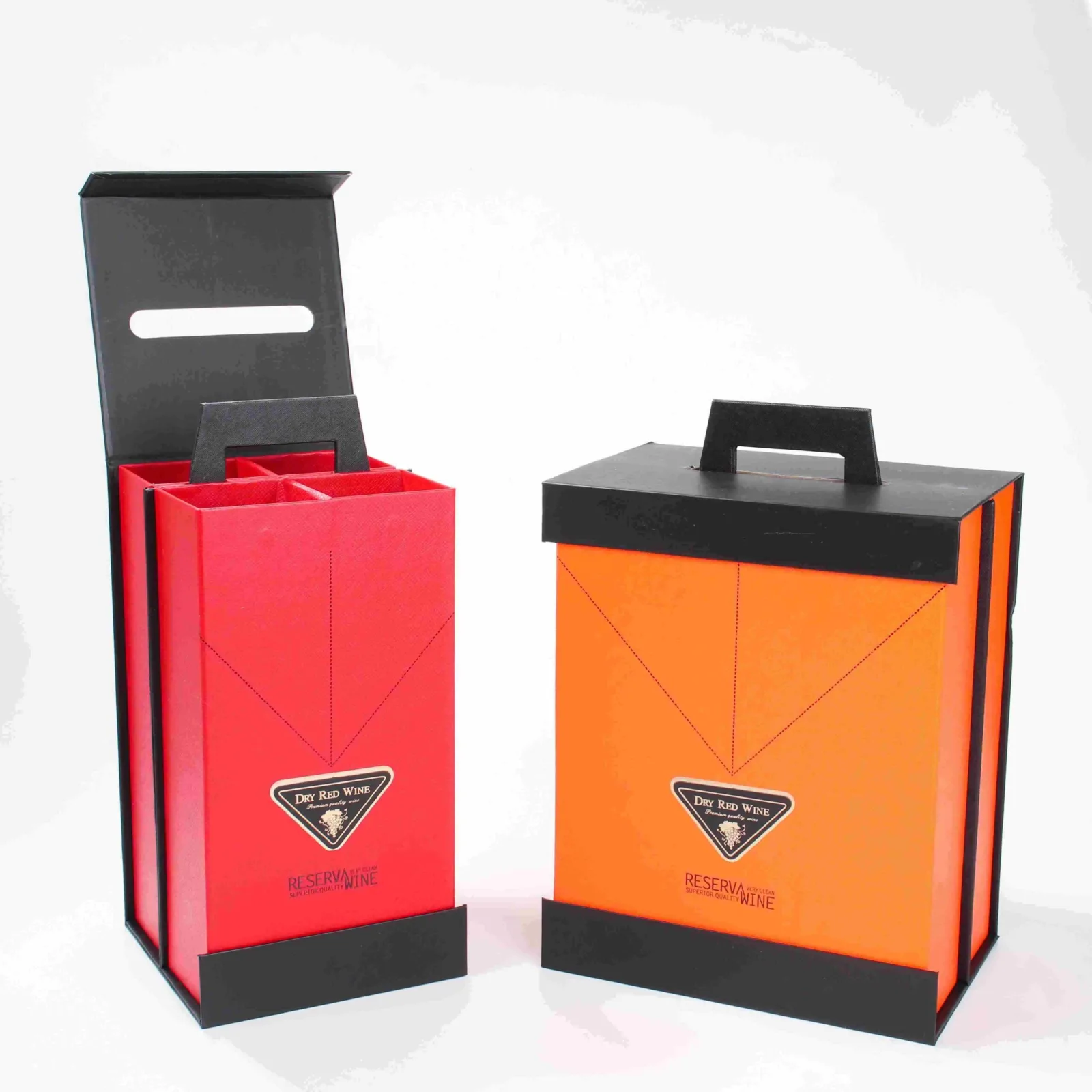
For a shipper that doubles as a retail box, the print matters more than the transit score. That is a different job from a plain courier carton, and it is worth deciding which one you are buying before you approve artwork. If the box goes on a shelf, look at single-bottle wine boxes built for display rather than a plain shipper with a label on it.
Where pulp is the wrong choice
Pulp is not always the answer. If your bottles vary in diameter from one order to the next, one cradle will not hold all of them well, and you will end up with a loose fit on the narrow ones. Foam tolerates that variation better.
If the shipper has to fold flat for storage, pulp cradles do not collapse the way a corrugated divider does. They nest, which helps, but they still take volume. A distributor with tight warehouse space often picks corrugated dividers for exactly that reason and accepts the weaker sideways grip.
And if the box is a gift, the customer sees the cradle before the bottle. Pulp is honest and it looks it. A velvet tray or a foam insert in a rigid box reads as a gift. That is a different product, and it belongs in a different carton. Our multi-bottle wine boxes cover the layouts where the box has to do both jobs.
Specification list for ordering
Bring these to the table and the conversation moves fast. Bottle count and layout. Bottle diameter, height and weight, or send a filled bottle. Whether the carton needs a handle. Print or plain. Whether the box ships as a courier carton or sells on a shelf. Whether the cradles need to nest for storage. Any brand colour that has to be matched.
Send box dimensions or a bottle sample, a reference design, quantity and any special requirements, and we can work from there. Two sample types are available: a blank sample to check structure, and a printed sample to check the visual. If you are still working out the rest of the transit spec, how to ship wine bottles safely walks through inserts, board and the tests that matter.
Key points
- Pulp grips at fixed points and crushes locally, so the bottle survives a hit that dents the carton.
- Cradle-to-carton fit matters as much as cradle-to-bottle fit. Both tolerances have to work together.
- Corner positions in a multi bottle carton take the hardest knocks. Overbuild those first.
- Foam tolerates bottle diameter variation; pulp does not. Pick according to your bottle range.
- Run the 10 second shake, the 45 degree tilt and the inversion before you approve anything.
Questions buyers ask
What is a pulp wine shipper made of?
A corrugated outer carton with molded paper pulp cradles inside. The cradles sit above and below the bottle or wrap the sides, holding the glass off the carton walls and away from the other bottles. The carton carries the stacking load and the pulp absorbs knocks by crushing locally.
Is molded pulp better than styrofoam wine shipping boxes?
Neither wins everywhere. Foam springs back after a knock and tolerates bottles that vary in diameter. Pulp reads better when the customer opens the box, but it has to be kept dry. If your bottle sizes change often, foam fits the job better. If the unboxing matters, pulp does.
How do you check the insert fit on a wine shipper?
Shake the loaded shipper for 10 seconds and nothing should move. Tilt it 45 degrees and the bottle should not slide. Invert it and the bottle should not release. The bottle also has to be held at four points, with no unsupported neck or shoulder.
Send your bottle sample or box dimensions and we will work out the cradle and carton together. Get a Quote
Put this on your bottle
Send the bottle sample or dimensions, quantity and a reference design. We reply with structure options and pricing.
- Email[email protected]