08 September 2026
wine moving boxes vs wine storage boxes: what changes
Choose wine moving boxes for a one time transfer, and choose wine storage boxes for months on a shelf. The two jobs pull the specification in different directions. A moving box is lifted, stacked on a truck, and opened within days. A storage box must hold its shape under a constant vertical load, keep the bottles apart, and resist damp. This page separates the two jobs so you can specify the right structure, board, insert, and check.
Moving Boxes: What Gets Handled
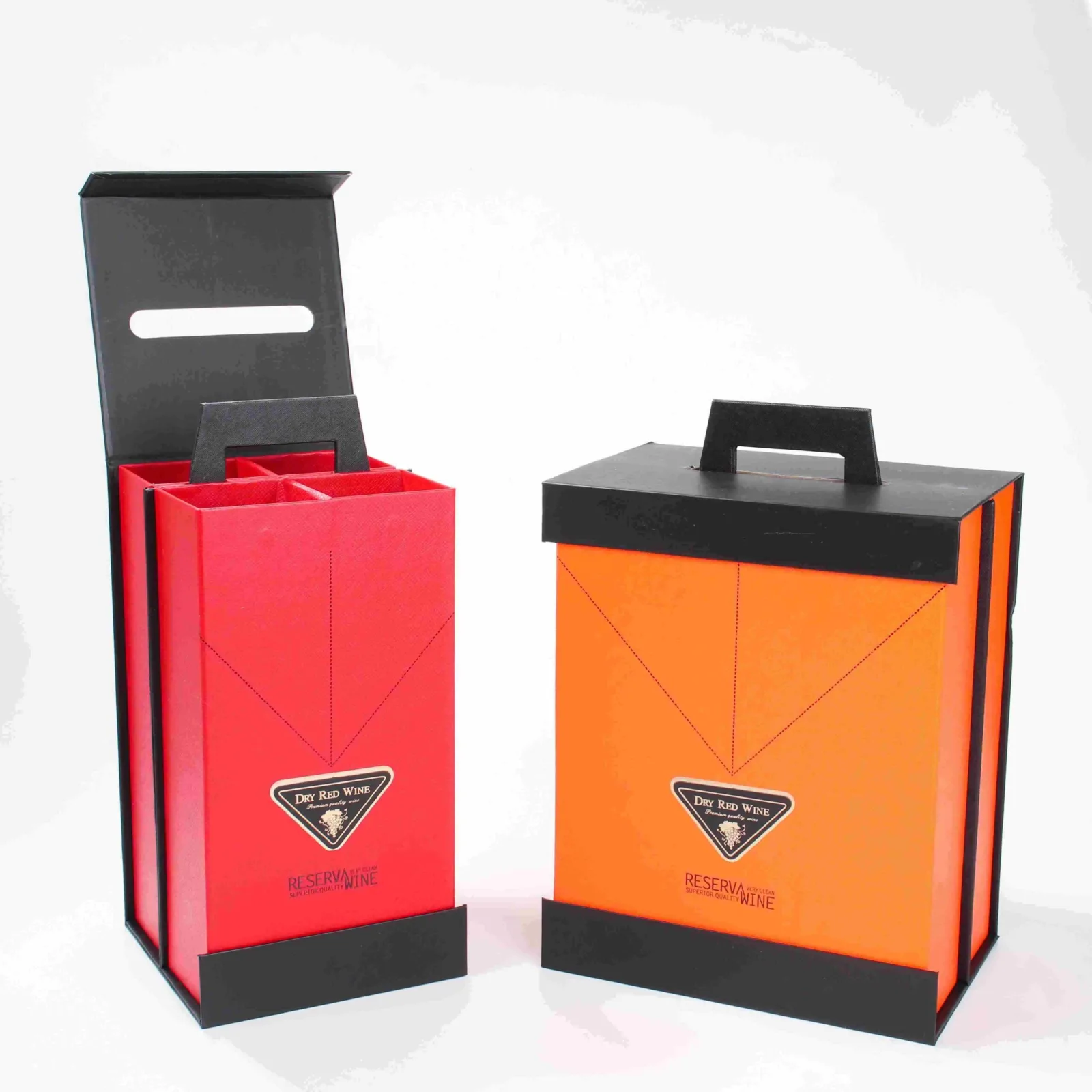
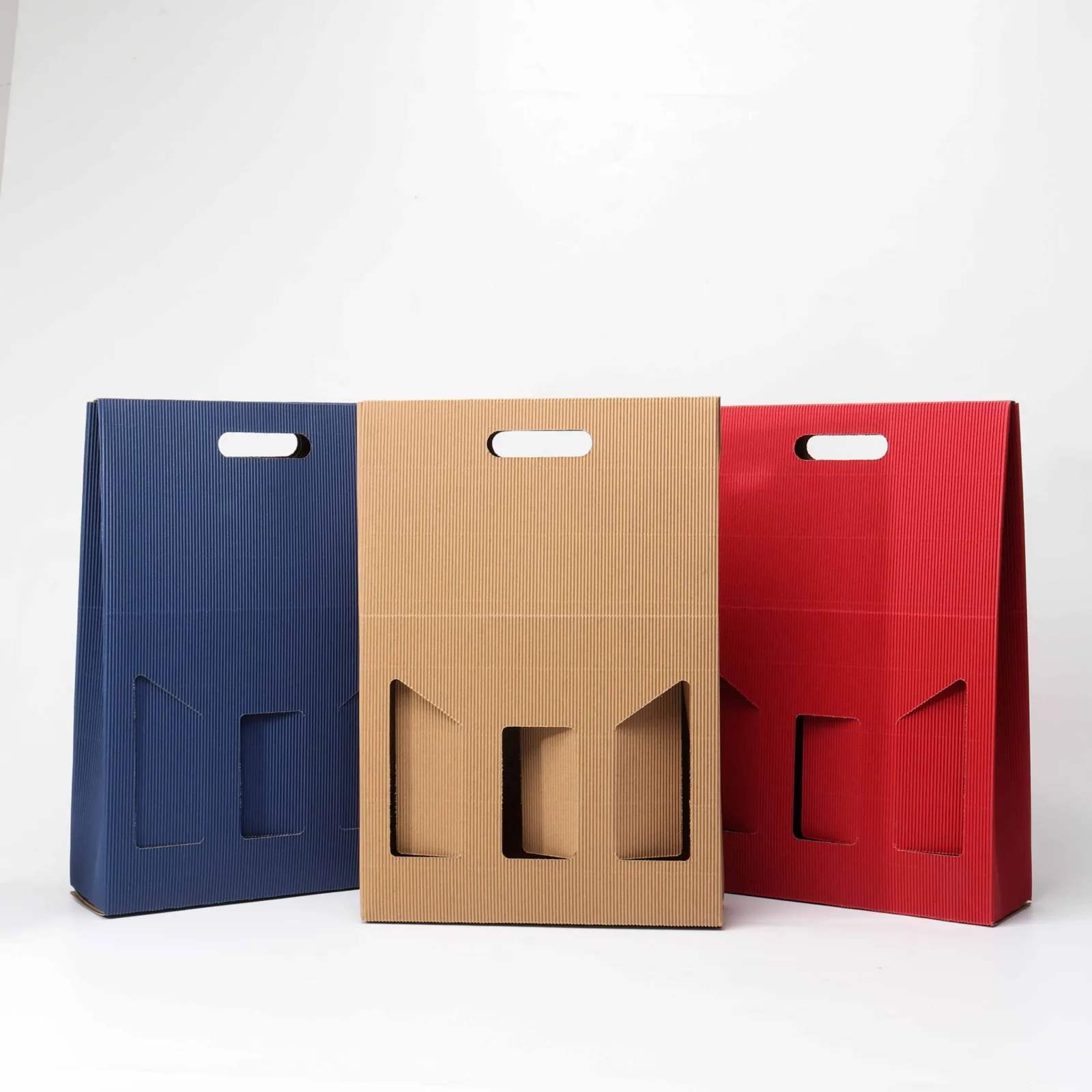
A moving box is handled more than a storage box. It gets picked up, set down, stacked, and opened. That means the panel that carries a hand hole or handle needs reinforcement. A cutout weakens the panel. For corrugated wine shippers, the cut must be small and backed with internal paper or board so the wall keeps its stiffness. You want a box that survives being lifted by one person, then loaded into a van, then unloaded. The handle is not just convenience. It is a stress point.
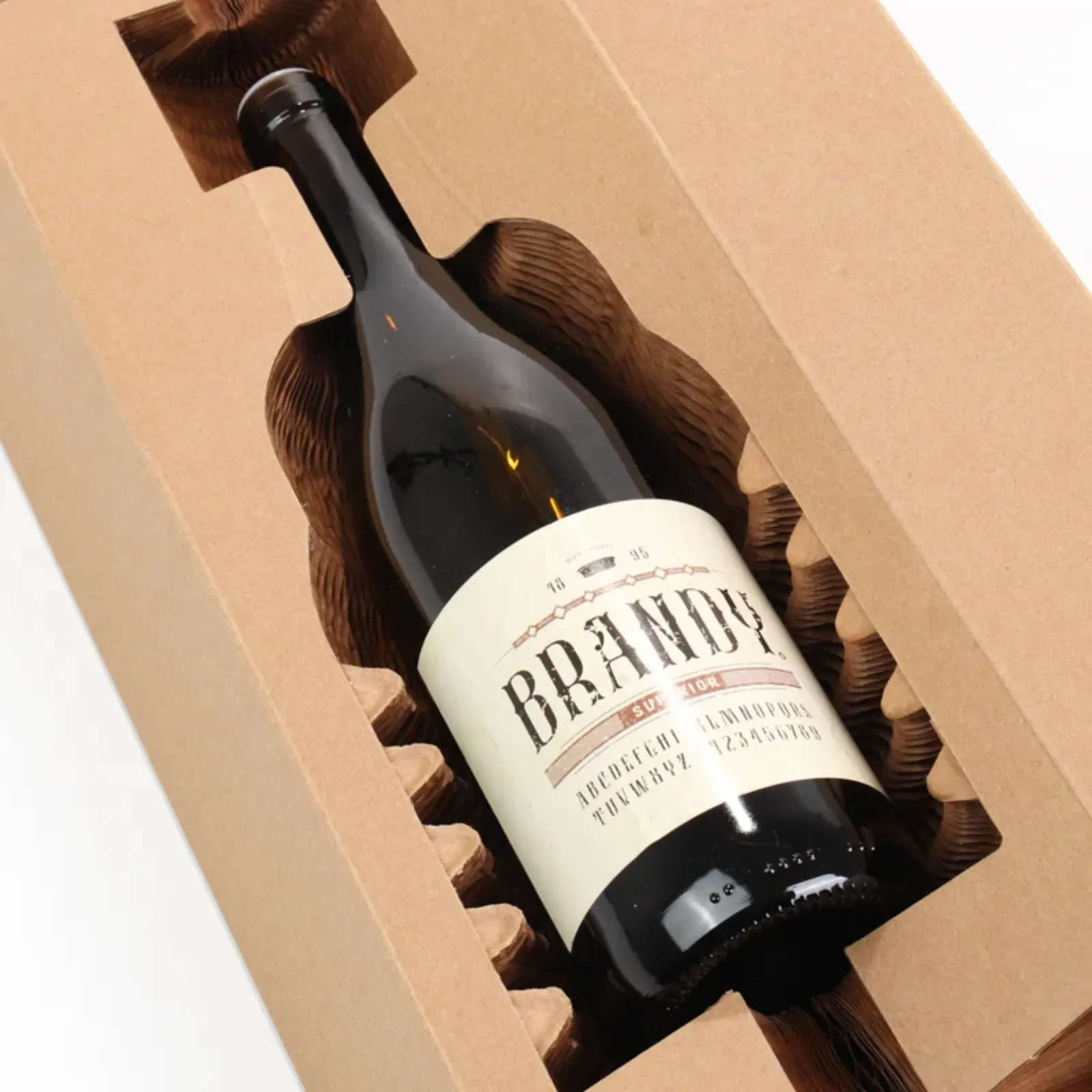
Once the shell is decided, the insert does the real work. The bottle is held at four points, and the neck and shoulder are never left unsupported. We check this by shaking for ten seconds with no movement, tilting to 45 degrees with no slide, and inverting with no release. Those are our in-house checks, not a named standard. They tell you whether the bottle will stay put while the box is carried, stacked, or jolted.
Storage Boxes: What Sits Still
A storage box sits still for months, so the load is constant and vertical. The box must support the weight of the bottles without creasing, and it must let boxes be stacked without crushing the lower one. Dividers matter more than cushioning, because the bottle must not touch another bottle. If the storage place is damp, the facing paper must not soften. Our board standard excludes recycled greyboard and high-moisture paper for this reason.
Because the box is judged over time, our in-house pre-shipment checks include a stacking top load of 40 kg or more for 24 hours. That is the closest proxy we run for shelf life under load. We also run a 1.2 m six-face drop test with the bottle loaded, plus truck and sea vibration simulation. You can see the full method on our quality page. None of these is sold as a standard. They are factory checks that show where the box will hold and where it will give.
Shared Spine: Board and Tolerances
Both jobs share a spine. Greyboard starts at 1200 g, and 1400 g is recommended for spirits. The facing paper should be at least 157 g. If the box will be stored, the paper must resist moisture. If the box will be moved, the board must resist repeated handling. You are not choosing between a thin, cheap shell and a thick, expensive shell. You are choosing the thinnest structure that still passes the job it will actually do.
Our control tolerance is tight because a small error adds up. The insert is plus or minus 1 mm, and the box body is plus or minus 2 mm. For foldable boxes, creases must not crack, magnet position is plus or minus 1 mm, and corners reach 90 degrees when erected. That level of control is what keeps the bottle from shifting, and it is what lets you compare one factory's box to another's without guessing.
Bottle Count Layouts
Bottle count drives the layout. A single bottle needs a simple tray. Two bottles need a divider. A multi-bottle tray needs a grid. You can browse single-bottle wine boxes and multi-bottle wine boxes to see how the panel count and divider pattern change with bottle count. The more bottles, the more the corners and edges take stress under load and over time.
In a twelve bottle tray, the corner position is the one that fails. The corner pocket holds the outermost bottle, and it carries more weight than the middle pockets. If the corner wall is thin or the divider is weak, the bottle shifts, and the whole tray can tilt. We watch that corner first when we build the tray, because it is the weak point in a full multi-bottle layout.
Checks That Separate the Jobs
Our in-house pre-shipment checks are not sold as a standard, but they separate the jobs. For moving, we run a 1.2 m six-face drop test with the bottle loaded. We simulate truck and sea vibration to show the bottle does not move. For storage, the stacking check is the main one. You can pair these checks with the shipping checklist if you are preparing a dispatch.
For both jobs, colour control matters less than structure, but it still affects display. We match Pantone colours, approve the first article, and take mid-run samples. Black, deep blue and burgundy are the hardest colours to hold. If your buyer will see the box on a shelf, the colour needs to match the proof. If your buyer will only ship it, the structure and checks matter more than the print.
Two Short Specs
Use these lists when you write your request. They are short, but they cover the parts that actually decide whether the bottle survives moving or stays put in storage. You can copy them into an email, a request for quotation, or a spec sheet. The goal is to stop buying a box that looks right but fails in the job it will actually do.
- For moving boxes, specify reinforced hand holes, four point insert, and in-house shake, tilt, and invert checks.
- For storage boxes, specify 40 kg stacking load, dividers that keep bottles apart, and facing paper that resists damp.
- For both jobs, specify greyboard 1200 g minimum, 1400 g recommended for spirits, and facing paper 157 g minimum.
- For tolerances, specify insert plus or minus 1 mm and box body plus or minus 2 mm.
When This Box Is the Wrong Answer
Sometimes the buyer wants a box that does both jobs, and that is where the spec gets harder. A moving box that also stores must keep its colour and shape over months. A storage box that will be moved must survive handling without cracking. If your buyer will only store the bottles, skip the extra handles and extra print. If your buyer will only move them, skip the long-term stacking load. Choose the job first, then choose the box.
Key points
- Choose wine moving boxes for transfer and wine storage boxes for shelf life.
- Handles and hand holes need reinforcement because they weaken the panel.
- Use 1200 g greyboard minimum, 1400 g for spirits, and 157 g facing paper.
- Run the in-house stacking check at 40 kg for 24 hours on storage boxes.
- Watch the corner of a twelve bottle tray first, since it takes the most load.
Questions buyers ask
How do I choose between wine moving boxes and wine storage boxes?
Choose by the job. If the bottle will be lifted, stacked on a truck, and opened within days, specify a moving box with reinforced handles, a four point insert, and the shake, tilt, and invert checks. If the bottle will sit on a shelf for months, specify a storage box with dividers, damp-resistant facing paper, and a stacking top load of 40 kg for 24 hours.
What makes a moving box different from a storage box?
A moving box is handled repeatedly, so handles, hand holes, and panel reinforcement matter. A storage box is judged by how it holds shape under a constant vertical load. Dividers keep bottles apart, and the facing paper must resist damp. Both jobs share the same board standard, but the checks you ask for are different.
Which bottle count layout is safest for a twelve bottle tray?
Use a grid layout with dividers that separate every bottle. Watch the corner position first, because it carries more load than the middle pockets. If the corner wall is thin or the divider is weak, the outermost bottle shifts. We build the tray so the corner holds, and we check the full tray under load.
Email us with your bottle count, box dimensions, and job: moving, storage, or both. Get a Quote
Put this on your bottle
Send the bottle sample or dimensions, quantity and a reference design. We reply with structure options and pricing.
- Email[email protected]