22 August 2026
Packaging for Shipping Wine Bottles by Count
Shipping wine bottles means choosing a format that matches the parcel count. One bottle needs a tight single-bottle shipper. Two bottles need a divider. Six and twelve bottle trays live or die by insert layout and corner protection. The wrong choice shows up as broken glass, a wet box, and a chargeback.
Single Bottle Shippers: The Tight Fit
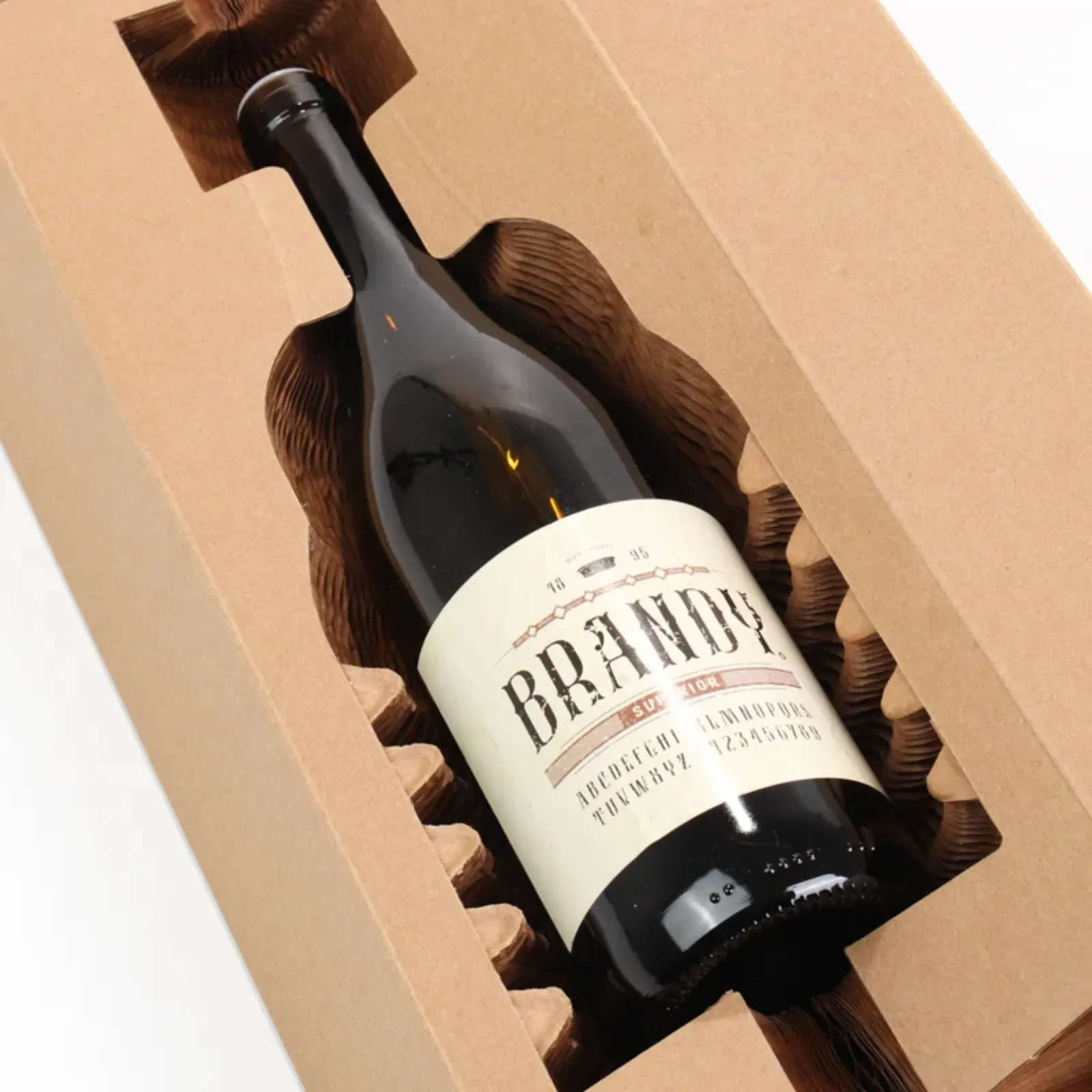
A single bottle shipper is the hardest working box in wine logistics. One 750 ml bottle, roughly 1.2 kg with glass and liquid, gets thrown into courier vans, dropped on sorting belts, and stacked under heavier parcels. The insert has to hold the bottle at four points: neck, shoulder, body, and base. No unsupported neck. No shoulder floating in air. Our in-house check is simple. Shake the closed box for 10 seconds. If you hear movement, the bottle will find the corner and break.
Think about the centre of gravity. A standing bottle in a tall narrow box tips easily. That is why most single bottle shippers work better with the bottle lying flat. The weight spreads along the longest axis. The box resists rolling. A flat bottle also lowers the drop height of the neck, which is the most fragile part.
For courier networks, a single bottle shipper takes a beating. It gets loaded and unloaded three times before it reaches the customer. A rigid box looks premium but adds weight and cost. A corrugated shipper with a die-cut insert does the job for less. See our Single-Bottle Wine Boxes for layouts that hold a bottle without extra void fill.
- Use a four-point insert, not just a bottom pad.
- Lay the bottle flat to lower the centre of gravity.
- Shake test for 10 seconds before approving the sample.
Two Bottle Shippers: The Divider Problem
Two bottles in one box is where dividers earn their keep. Without a divider, the bottles knock against each other. Glass on glass is a losing game. The divider has to be thick enough to absorb impact, not just separate the bottles. A thin cardboard flap fails on the first drop.
The layout matters more than the material. Two bottles side by side, lying flat, with a full-height divider between them. That is the standard. If you stand them upright, the box gets tall and top-heavy. Couriers stack things on top of it. A tall box with two heavy bottles becomes a lever. The bottom corners crush.
Palletised freight is kinder. The box sits in a layer, surrounded by other boxes. The divider still matters, but the main threat shifts to compression. Stacking top load of 40 kg or more for 24 hours is our check. A two-bottle box that survives a courier drop may still collapse on a pallet. Check our Two-Bottle Wine Boxes for divider designs that hold up in both lanes.
- Full-height divider, not a partial flap.
- Side-by-side flat layout beats upright.
- Test compression for pallet stacking, not just drops.
Three to Six Bottles: The Tray Layout
Once you hit three bottles, you are in tray territory. A tray with individual cells, usually a paper mould or EVA foam, holds each bottle in place. The bottles lie flat or at a slight angle. The tray slides into an outer box. This is the workhorse for wine clubs and mixed cases.
The middle of the tray is the survivor. A bottle in the centre cell is surrounded by other bottles and the tray walls. It barely moves. The corner cell is the one that breaks. It takes the full force of a drop on that corner. The bottle inside acts like a hammer. If the insert wall is thin or the bottle has room to slide, the corner bottle hits the outer box and cracks.
That is why insert tolerance matters. We hold inserts to plus or minus 1 mm. A loose insert lets the bottle build momentum. A tight insert transfers the shock to the tray, which flexes and absorbs it. The bottle should not move when you tilt the box 45 degrees. It should not release when you invert it. For six bottle formats, look at our Multi-Bottle Wine Boxes.
- Corner cells need the thickest insert walls.
- Hold insert tolerance to plus or minus 1 mm.
- Tilt test at 45 degrees and invert test before shipping.
Twelve Bottle Cases: The Pallet Format
A twelve bottle case is a different animal. It is heavy when full. That changes the handling. Couriers may refuse it or charge oversize rates. The real home for a twelve bottle case is a pallet. Stacked five or six high, the bottom case carries the weight of all the cases above it.
The insert design for twelve bottles is less about drop protection and more about compression. The bottles themselves can carry some of the load, but only if the insert keeps them upright and separated. A bottle lying flat in a twelve bottle case wastes space and weakens the stack. Upright bottles with a full-cell tray transfer the vertical load through the bottle necks to the base. That is not ideal either, but it is better than a case that collapses.
The corner bottle problem gets worse with twelve bottles. The corner cell is now at the edge of a much heavier box. A drop from 1.2 m, our standard check, puts enormous force on that corner. The insert wall has to be thick, and the outer box needs to be a proper corrugated shipper, not a retail box. See our Corrugated Wine Shippers for twelve bottle formats built for pallet freight.
- Upright bottles with full-cell tray for compression.
- Twelve bottle cases belong on pallets, not courier vans.
- Reinforce corner cells for the 1.2 m drop test.
Handles: Helpful but Weak
A handle on a wine box is a trade-off. It helps the person carrying the box. A six or twelve bottle case without a handle is awkward. You grip it from the bottom, which strains your back and risks dropping it. A die-cut handle in the top panel makes the carry easy.
But the handle weakens the panel it is cut into. The top panel of a corrugated shipper loses stiffness. Under stacking load, the handle area can buckle. The fix is reinforcement. A double-layer top panel around the handle, or a plastic handle insert, spreads the load. Without reinforcement, the handle is the first point of failure on a pallet.
For a single or two bottle shipper, skip the handle. The box is light enough to carry without it. The handle just adds cost and a failure point. For six and twelve bottle cases, a reinforced handle is worth it. The person carrying the box will thank you, and the box will survive the pallet.
- Handles help carrying but weaken the panel.
- Reinforce the top panel around any handle cut.
- Skip handles on single and two bottle shippers.
Mixed Cases: Different Bottles, One Tray
A mixed case with different bottle shapes is the hardest packaging problem. Burgundy, Bordeaux, and sparkling bottles have different diameters and shoulder heights. One tray cell cannot fit all three perfectly. The result is a bottle that rattles, a neck that leans against the cell wall, and a break waiting to happen.
The answer is not a universal cell. It is a custom insert designed for the specific bottle set. We ask for bottle samples or exact dimensions. Then we cut the cells to fit the largest bottle and add flexible fingers or foam pads to hold the smaller ones. The four-point rule still applies: neck, shoulder, body, base. Every bottle, every cell.
Mixed cases also shift the centre of gravity. If the heavy sparkling bottle sits in one corner and the light Burgundy in the other, the box tilts. That affects stacking and handling. Balance the weight across the tray. Put the heaviest bottles in the middle cells, not the corners. For a custom layout, start with our Custom Wine Shipping Box Manufacturing process.
- One universal cell does not fit all bottle shapes.
- Cut cells for the largest bottle, pad the smaller ones.
- Put heavy bottles in middle cells to balance the tray.
Corrugated Shipper or Rigid Box?
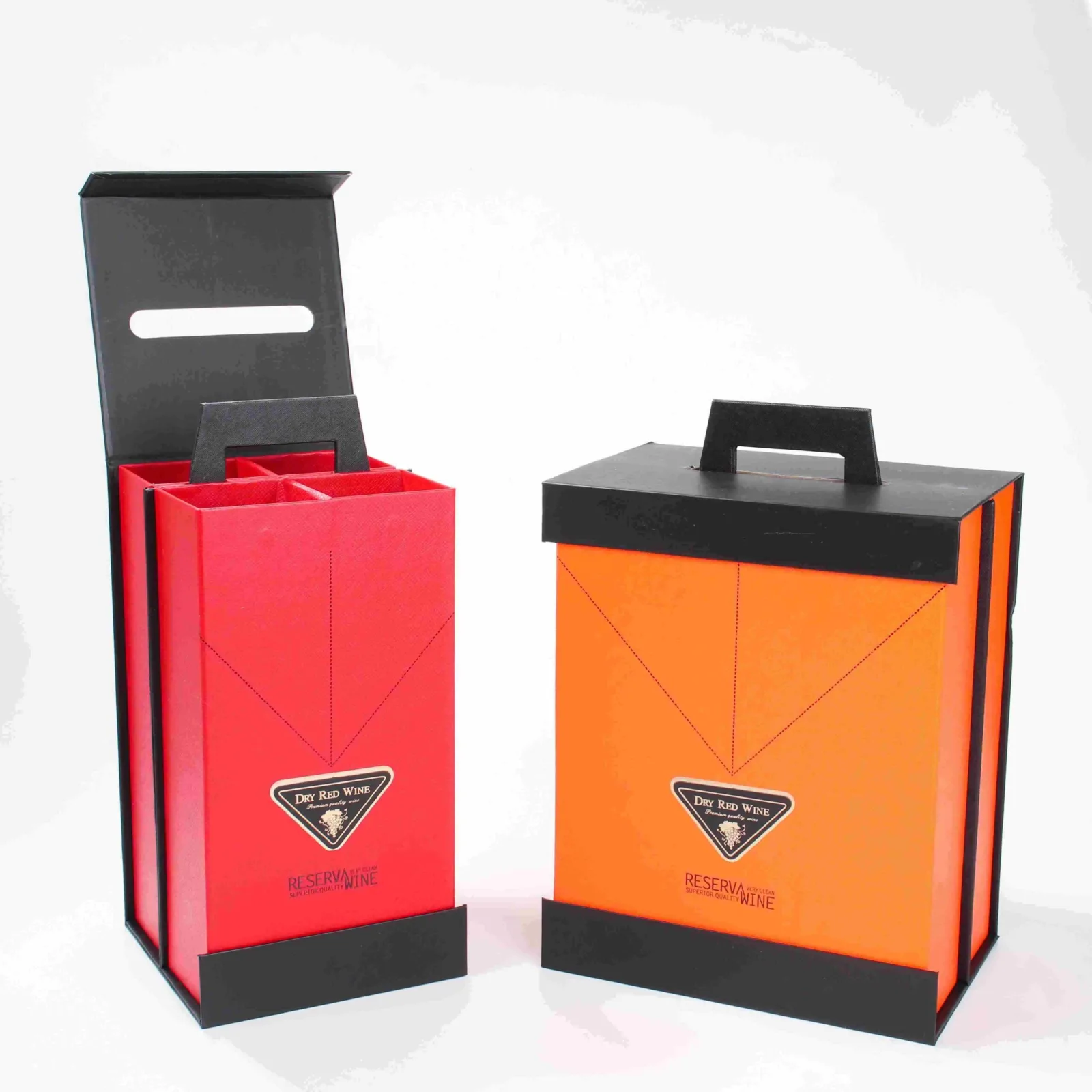
The rule of thumb is simple. If the box goes through a courier network, use a corrugated shipper. If it goes on a pallet and then to a retail shelf, a rigid box can work, but only if it is designed as a shipper. A rigid retail box with a magnetic closure and a pretty paper wrap is not a transit box. It is a display box that happens to hold a bottle.
Corrugated shippers absorb impact. The flutes crush slightly, which protects the bottle. They are also lighter, which matters for shipping costs. Rigid boxes made from greyboard are stiffer and heavier. They protect against compression better than corrugated, but they transfer more shock to the bottle on a drop. The insert has to do more work.
A rigid box used as a shipper needs a corrugated outer carton anyway. That is two boxes, double the cost and double the weight. Unless the rigid box is the retail packaging and the transit packaging in one, it is not worth it. For pure shipping, corrugated wins. For a gift that ships, a rigid box inside a corrugated outer is the honest answer. Browse our Rigid Wine Boxes for Transit and Display to see the difference.
- Courier network: corrugated shipper.
- Pallet to shelf: rigid box only if designed as a shipper.
- Rigid retail box alone is not a transit box.
Key points
- Match the insert to the bottle count, not the other way around.
- Corner cells break first, so reinforce them in every tray.
- A handle needs reinforcement or it becomes the weak point.
- Mixed cases need custom cells, never a universal tray.
- Corrugated for courier, rigid only when designed as a shipper.
Questions buyers ask
What is the best insert for a single bottle shipper?
A four-point insert holding the neck, shoulder, body, and base. The bottle should lie flat, not stand upright. Shake the closed box for 10 seconds. If you hear movement, the insert is too loose and the bottle will break in transit.
Why do bottles in the corner of a tray break more often?
The corner cell takes the full force of a drop on that corner. The bottle inside acts like a hammer against the outer box. A centre cell is cushioned by surrounding bottles. Thicker insert walls in the corners and a tight tolerance solve most of it.
Can I use a rigid retail box as a shipping box?
Only if it is designed as a shipper. A rigid box with a magnetic closure and paper wrap is a display box. It needs a corrugated outer carton for transit. Otherwise, the rigid box will crush, the corners will dent, and the bottle will break.
Send your bottle count and a sample or dimensions, and we will recommend the insert layout that survives your shipping lane. Get a Quote
Put this on your bottle
Send the bottle sample or dimensions, quantity and a reference design. We reply with structure options and pricing.
- Email[email protected]