15 August 2026
Wine Packaging for Shipping: A Pre-Dispatch Checklist
You don't want to find out your wine packaging for shipping fails after the pallet is on the truck. This checklist gives you five repeatable stages to run before dispatch: incoming board, insert fit, closure, transit simulation, and pallet prep. Each check catches a real failure mode we see in the factory.
Stage 1: Check the Board
Start with the carton itself. We spec greyboard at 1200 g minimum for standard bottles. If you're shipping spirits or heavy glass, step up to 1400 g. Don't accept recycled greyboard. It looks similar on the shelf, but it compresses under stacking load and the corners go soft. That's the first place a pallet fails.
Facing paper matters too. We use 157 g minimum specialty or coated paper. Lighter facing tears at the score lines. High-moisture paper is another reject. It feels damp or limp, and it will warp after lamination. If the board doesn't match the approved first article, stop there. Print and colour should be checked against the same first article. Black, deep blue and burgundy are the hardest to hold. Look at them under the same light you used for approval.
- Compare board weight and facing paper to the spec.
- Reject recycled greyboard or high-moisture paper.
- Check print and colour against the approved first article.
Stage 2: Test the Insert
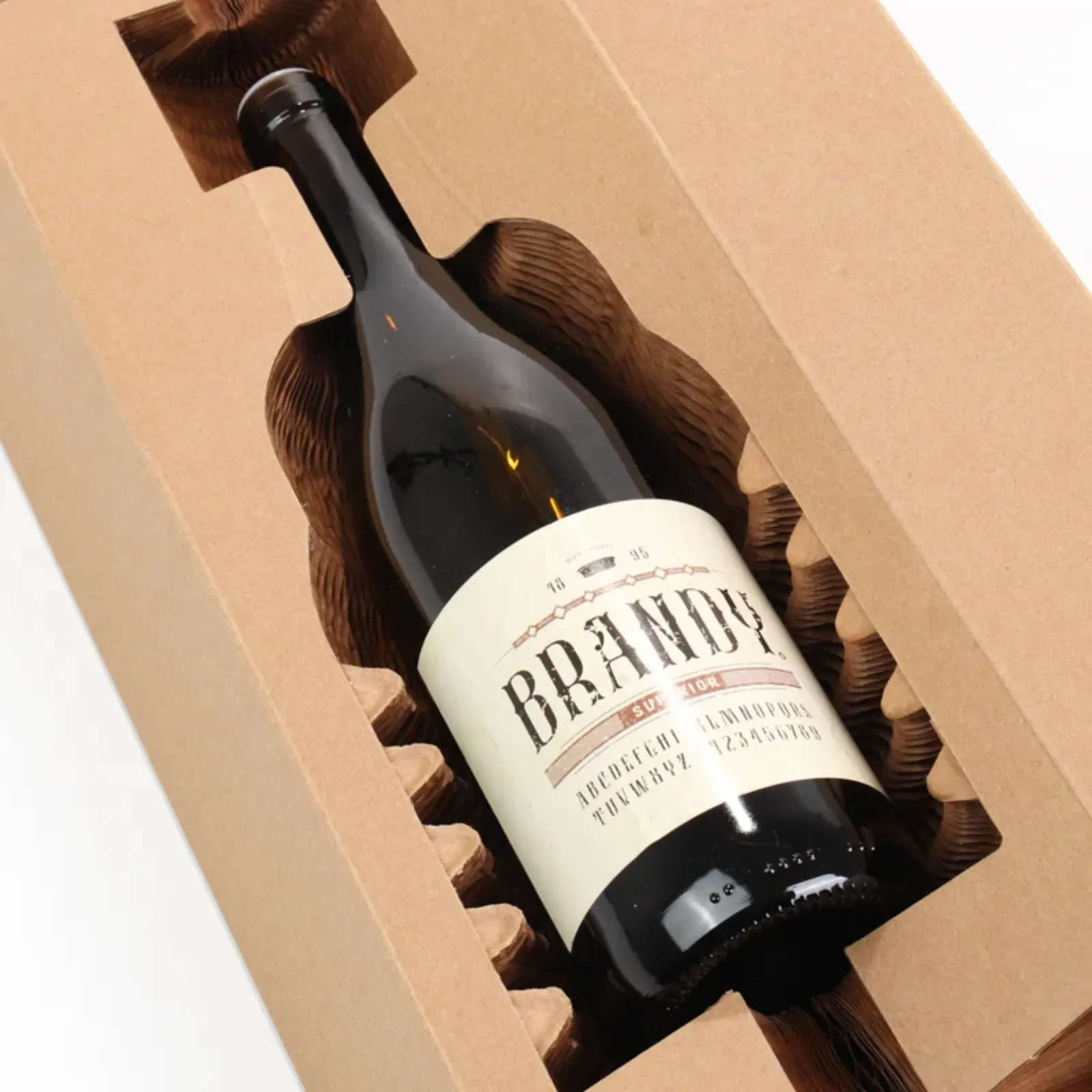
The insert is what keeps the bottle alive. Our rule is simple: the bottle must be held at four points, with no unsupported neck or shoulder. If the neck floats, a drop will snap it. If the shoulder is loose, the bottle shifts and rubs the label.
Run three physical checks on a sample from the run. Shake the box hard for 10 seconds. There should be no movement. Tilt it 45 degrees. The bottle should not slide. Invert the box. The bottle must not release. If any of those fail, the insert is wrong. We hold insert tolerance to plus or minus 1 mm and box body to plus or minus 2 mm. That sounds tight, but a 2 mm gap at the bottle shoulder is enough to cause label scuffing across a truck ride.
- Confirm four-point bottle support with no unsupported neck or shoulder.
- Shake 10 seconds: no movement.
- Tilt 45 degrees: no slide.
- Invert: no release.
Stage 3: Check Closure and Sealing
A box that closes under tension will pop open in transit. When you fold the flaps, they should meet cleanly. If you have to force them down, the insert is too tall or the board is off. Flap alignment matters. A crooked flap means the tape won't sit flat, and the seal fails from the edge.
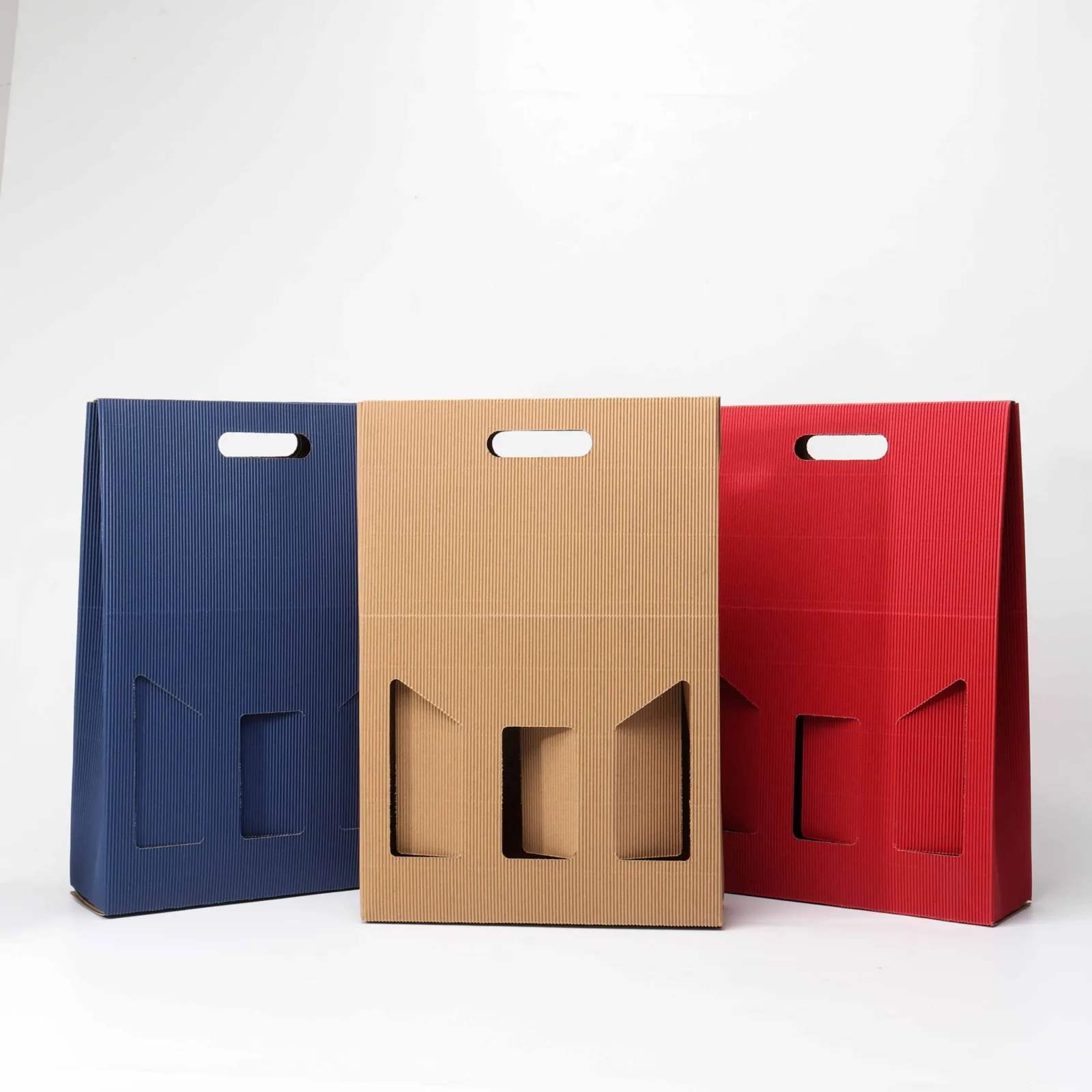
Tape pattern is a discipline. Two strips across the seam, one down each side. Not one strip down the middle. The side strips are what hold the flaps when the box is dropped on a corner. Check that the tape is pressed down, no bubbles, no lifted edges. If the box is a corrugated wine shipper, the same rule applies. Corrugated flexes, so a tensioned closure is even more likely to fail there.
- Flaps meet without force.
- Tape pattern: two across, one down each side.
- No bubbles or lifted tape edges.
Stage 4: Simulate the Trip
Our in-house checks are not a lab test, but they catch most failures before the pallet leaves. Take a sample from the run, loaded with the real bottle. Drop it from 1.2 m on all six faces. Then stack 40 kg or more on top for 24 hours. Finally, run a vibration simulation for truck and sea conditions. The bottle must not move inside.
This is where two-bottle wine boxes show their weakness. Two bottles side by side create a lever. If the divider is too thin, one bottle hammers the other. The drop test will find it. The vibration test finds slow abrasion. Labels rub against the insert and lose their finish. That's a return waiting to happen.
If the box fails the drop test, don't just add more tape. The structure is wrong. Go back to the insert or the board. Tape won't fix a weak corner.
- Run the 1.2 m six-face drop with bottle loaded.
- Stack 40 kg or more for 24 hours.
- Vibrate for truck and sea, then check for internal movement.
Stage 5: Pallet and Paperwork
The last stage is the one people skip. Check the pallet pattern. Boxes should not overhang the pallet edge. Overhang transfers load to the box walls, and they crush. Corner boards help, but only if they are the right height. A corner board that stops halfway is worse than none.
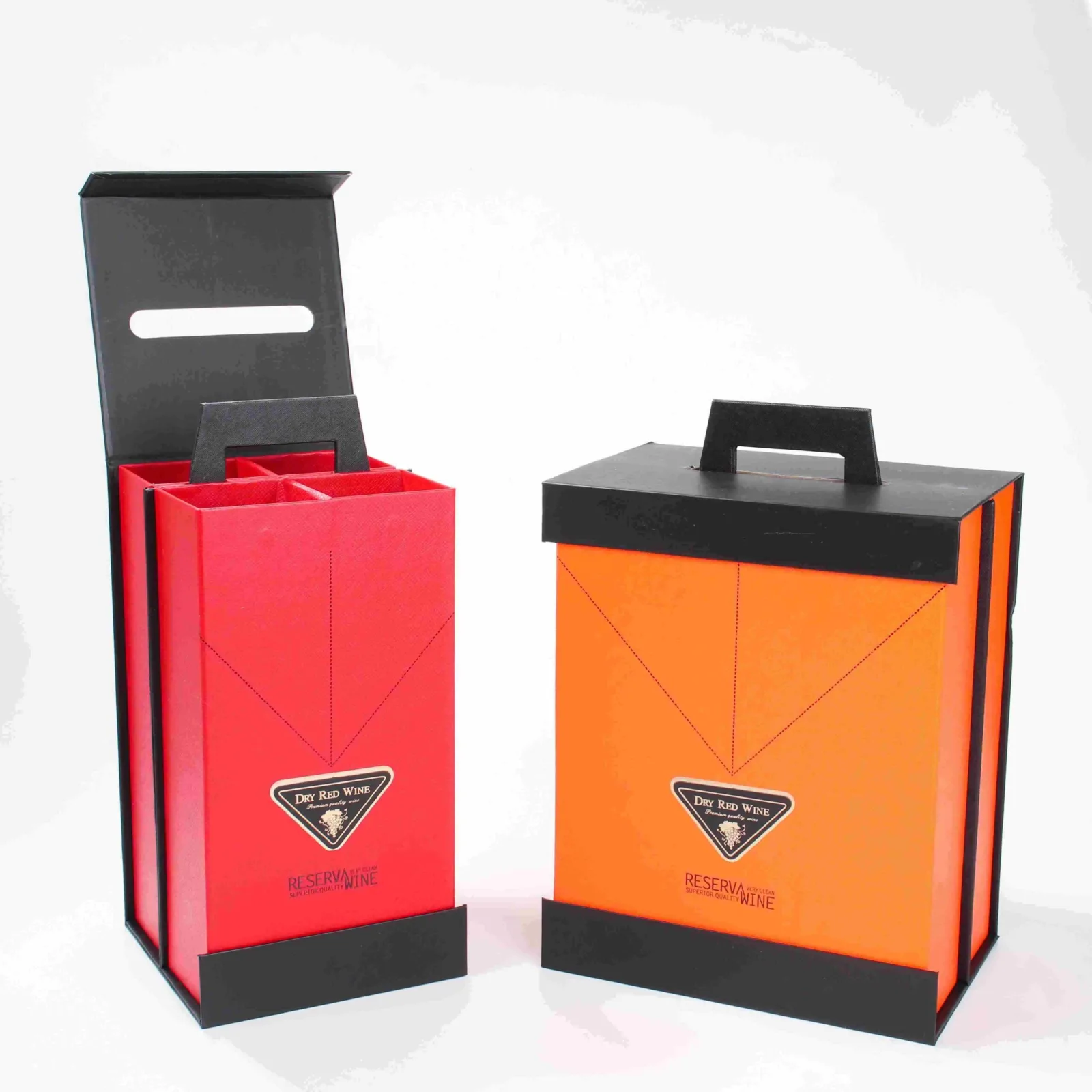
Documentation matters for the receiver. The packing slip should list the bottle count, the box type, and any special handling. If you're shipping multi-bottle wine boxes, note the orientation. A six-bottle box laid flat is stable. The same box on its side will shift. Mark the pallet if it must stay upright.
One more thing. Take a photo of the loaded pallet before the wrap goes on. When a claim comes in, that photo is your best evidence. It shows the boxes were intact and the pattern was correct.
- No box overhang on the pallet.
- Corner boards full height.
- Packing slip lists count, box type, orientation.
- Photo of loaded pallet before wrapping.
Two Failures We See Most
The first is neck breakage. The bottle is held at the base and the body, but the neck is unsupported. A drop on the top face snaps it. Our insert rule catches this. If the neck touches nothing, the insert is wrong. Reject it before the run.
The second is label scuffing. It happens over time, not in one drop. The bottle moves a fraction of a millimetre with every vibration. The label rubs against the insert and loses its sheen. The shake, tilt and invert checks catch the gross movement. The vibration simulation catches the slow abrasion.
Both failures are avoidable if you run the checks in order. Board first, then insert, then closure, then simulation. Skip one, and you're gambling.
- Unsupported neck causes breakage on top-face drops.
- Slow label scuffing comes from vibration, not impact.
- Run checks in order: board, insert, closure, simulation.
When Our Box Is the Wrong Answer
If you're shipping a single bottle in a poly mailer, this checklist is overkill. Our boxes are for wine that needs structure. If your bottle is going in a gift bag and handed to a customer, a multi-bottle and in-store packing solution might be more relevant. But if the bottle goes on a truck, a ship, or a courier van that gets loaded three times before it reaches the customer, run the checks.
Also, if your volume is low and you're hand-filling a few boxes a week, you can sample more. Run the checks on every batch, not every box. The point is to catch a bad batch before it leaves, not to inspect every unit.
- Not for poly mailers or hand-delivered gift bags.
- Not for low-volume hand filling; sample per batch instead.
- For truck, ship, or multi-load courier routes, run all checks.
Key points
- Check board weight and facing paper against spec first.
- Insert must hold the bottle at four points with no unsupported neck.
- Run shake, tilt, and invert checks on a sample from the run.
- Simulate the trip: drop, stack, vibrate.
- Inspect pallet pattern and document before wrapping.
Questions buyers ask
What board weight should I use for wine shipping boxes?
We use greyboard at 1200 g minimum for standard wine bottles. For spirits or heavy glass, 1400 g is recommended. Never accept recycled greyboard or high-moisture paper. Facing paper should be 157 g minimum specialty or coated.
How do I know if the bottle insert is good enough?
The bottle must be held at four points with no unsupported neck or shoulder. Run three checks: shake hard for 10 seconds, tilt 45 degrees, and invert. No movement, no slide, no release. Our insert tolerance is plus or minus 1 mm.
What transit tests should I run before dispatch?
Our in-house checks are a 1.2 m six-face drop with the bottle loaded, 40 kg or more stacking top load for 24 hours, and truck and sea vibration simulation. The bottle must not move inside after any of these.
Send your box dimensions and bottle sample, and we'll check the structure against this checklist before you commit. Get a Quote
Put this on your bottle
Send the bottle sample or dimensions, quantity and a reference design. We reply with structure options and pricing.
- Email[email protected]